Skip to content
explorationspatiale
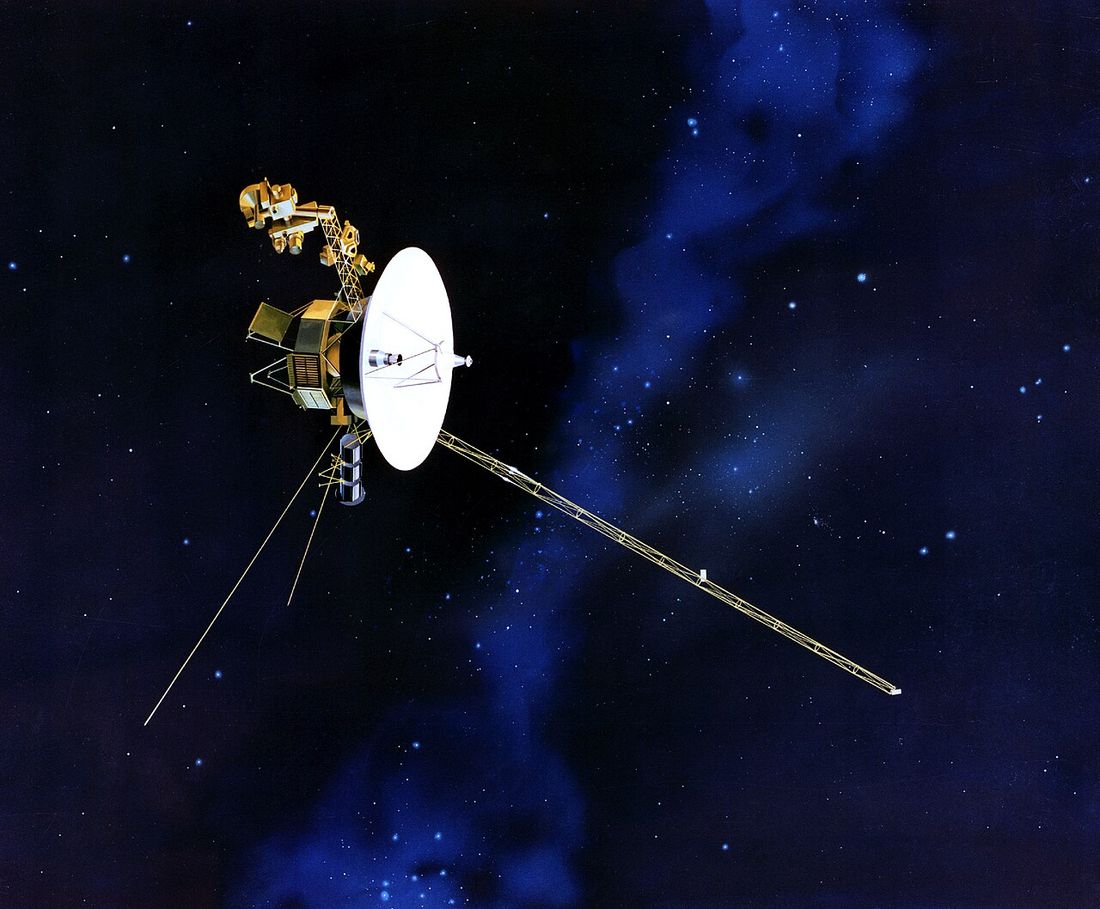
Voyager 2
Visual feed · NASA
Image: NASA/JPL-Caltech
Ongoing · interstellar spaceNASAInterstellar space
DifficultyExtreme
Launched Aug 20, 1977

Voyager 2

Launched two weeks before its twin, Voyager 2 is the only probe to have flown by all four giant planets: Jupiter, Saturn, then, a world first, Uranus (1986) and Neptune (1989). It reached interstellar space in 2018.

Agency
NASA / JPL
Launch
Aug 20, 1977 (Titan IIIE-Centaur)
Exclusive
The only one to have flown by Uranus and Neptune
Power
3 plutonium RTGs
Mission timeline
1977
Launch, two weeks before Voyager 1
1979
Jupiter flyby
1981
Saturn flyby
1986
Uranus flyby, the only one to date
1989
Neptune and Triton flyby
2018
Heliopause crossing

Objective

Carry out the 'Grand Tour' of the outer Solar System made possible by a planetary alignment that recurs only every 176 years, then extend the measurements in the heliosphere and beyond.

Mission profile

Simplified diagram of the main phases.

1
Grand Tour
Jupiter, Saturn, Uranus, Neptune: four giants in twelve years.
2
Interstellar mission
Measurements of the interstellar medium since 2018.
3
Gentle shutdown
Careful power management to extend the measurements.

Challenges & risks

A single antenna listening
Its trajectory dives below the plane of the ecliptic: only the large Canberra antenna (DSS-43) can talk to it.
Declining power
Like its twin, it switches off its instruments one by one.
Fragile communications
In 2023, an erroneous command misaligned its antenna: contact was restored thanks to an interstellar 'shout' from the DSN.

The mission's vocabulary

Grand Tour

A trajectory exploiting the successive gravity assists of the giant planets, made possible by their alignment in the 1970s-80s.

Gravity assist

A maneuver using a planet's gravity to gain speed and change course without fuel.

The big question

The questions everyone asks

Why two Voyagers?

To take advantage of a rare planetary alignment (every 176 years) with two complementary trajectories: Voyager 1 favored Titan, Voyager 2 pushed on to Uranus and Neptune.

Will we see Uranus and Neptune again?

No mission is committed to date: a Uranus orbiter is regularly ranked a priority by the US scientific community, without confirmed funding.

What we know, and what remains uncertain
Confirmed fact

The confirmed elements of the mission (architecture, primary objectives).

Likely

The upcoming schedule and milestones, subject to technical qualifications.

Uncertain

The developments dependent on other building blocks of the program.

Voyager 2 · beyond981.com